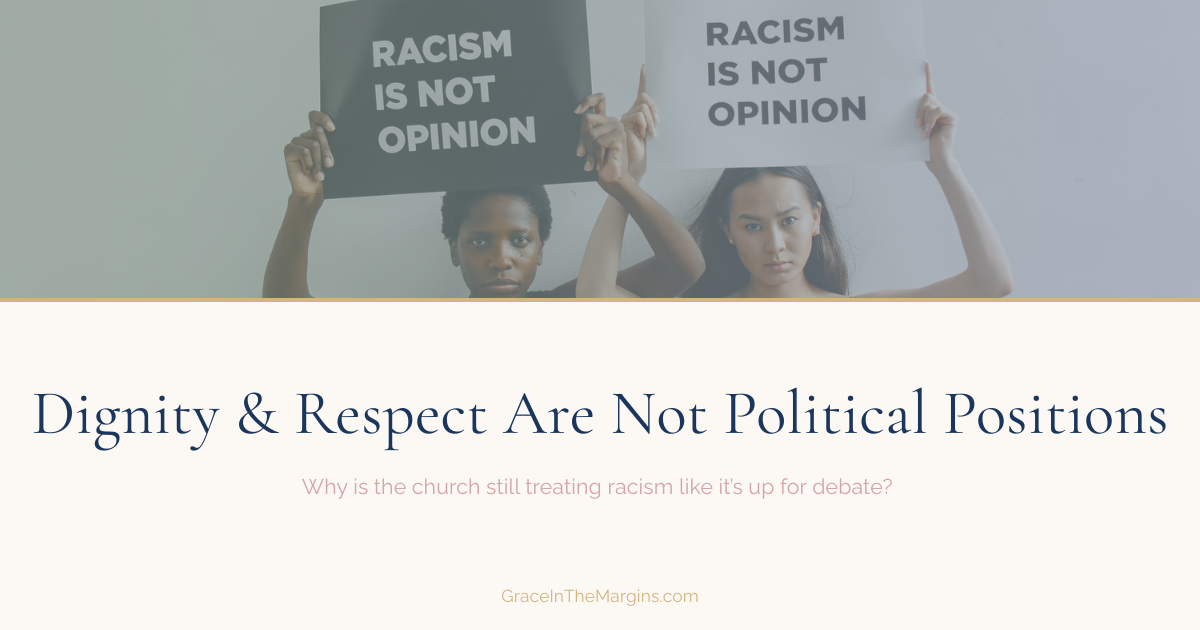
Genesis opens with a staggering claim about every person you will ever meet: “So God created mankind in his own image” (Genesis 1:27). Before culture, language, history, or nationality, there is divine imprint.
I saw a post recently that stopped me cold. It laid out the theological case for why racism isn’t just toxic—it’s blasphemous. And I haven’t been able to stop thinking about it since.
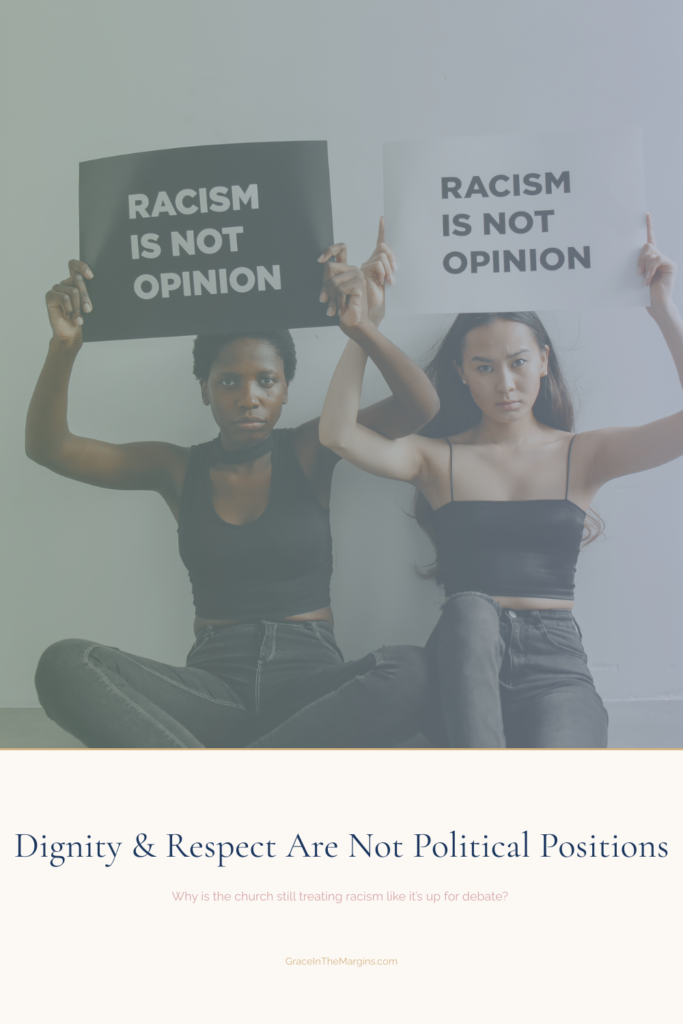
James 3:9 won’t let us off the hook. “With the tongue we praise our Lord and Father, and with it we curse human beings, who have been made in God’s likeness.” You cannot worship God while diminishing those made in His image. Scripture will not let us separate our theology from how we see and treat people.
Racism shrinks what God has declared sacred. It assigns lesser worth where God has assigned His own likeness. It speaks as if the image of God can be graded, diluted, or ignored.
This is why the conversation cannot live in the realm of etiquette or opinion. It is not a matter of being polite. It is not a personality flaw. It is not a difference in perspective. It is sin against a holy God and harm against a holy image.

Until We See Every Face
Until we learn to see every face as a reflection of the Creator, we will keep treating a blasphemous problem as if it were merely a social one.
The word “blasphemy” might feel strong. It should. And there’s room to discuss whether racism technically meets the theological definition of blasphemy—speech or action directly against God’s character.
But there’s no room to argue about whether it’s sin.
James 3:9 doesn’t give us wiggle room: “With the tongue we praise our Lord and Father, and with it we curse human beings, who have been made in God’s likeness.” You cannot separate how you treat the image from how you treat the One whose image it bears.
And Jesus made it even clearer in Matthew 25:40—”Truly I tell you, whatever you did for one of the least of these brothers and sisters of mine, you did for me.” What we do to image-bearers, we do to God Himself. When we diminish, dehumanize, or devalue someone because of their race, we’re not just sinning against them. We’re sinning against the God whose image they bear.
That’s why Simkin’s claim of blasphemy felt like a gut punch. Because racism doesn’t just break the second commandment to love our neighbor—it violates the first commandment by treating God’s creative work as inferior, by declaring that some of His image-bearers are worth less than others.
Sin is something we name honestly, repent of deeply, and turn from decisively. That’s the only path forward.
I’ve spent years wrestling with this, uncovering and acknowledging how I’ve made assumptions based on appearance, how I’ve stayed silent when I should have spoken up, how I’ve chosen comfort over conviction. This isn’t just personal failure—it’s the result of 250 years of propaganda and programming that built a racist nation.
Now is a time of reckoning. But we have to admit and confess and repent to heal.
What Scripture Actually Says
James 3:9 doesn’t mince words—Scripture will not let us separate our theology from how we see and treat people. You cannot claim to worship God while cursing those made in His image. The disconnect is theological, not just social.
This hits differently when you understand what the early church fathers said about this. The image of God isn’t just spiritual—it’s embodied. It’s in the face of every person, regardless of skin color, ethnicity, or origin.
Matthew D. Kim puts it plainly: “Racism is an aberration from God’s desire for all human beings to reach unity in the faith and in the knowledge of the Son of God.” It’s not just about being nicer to people who look different from us. It’s about recognizing that treating anyone as less-than is treating God’s image as less-than.
When we diminish someone because of their race, we’re not just hurting them. We’re attacking the image of their Creator.
My Own Reckoning
I can define the imago Dei theologically. I can explain the doctrine clearly.
But understanding it intellectually and living it out are two different things.
I’ve had to ask myself hard questions: When have I been quicker to extend grace to people who look like me? When have I made assumptions about someone’s character, intelligence, or worth based on their appearance? When have I stayed silent about racism because speaking up felt uncomfortable?
The honest answer? More times than I want to admit.
What This Actually Requires
Calling racism what it is—sin and blasphemy—means we can’t just feel bad about it. We have to actually change.
For me, that’s looked like:
- Praying for people I find myself making assumptions about, asking God to help me see them as He does
- Actively seeking out voices and perspectives different from my own, not to debate but to listen and learn
- Speaking up when I hear racist comments or jokes, even when (especially when) it makes me uncomfortable
- Examining the systems and structures I benefit from and asking how they perpetuate racial inequality
- Teaching my children to see every person as an image-bearer of God, not as a category or stereotype
This isn’t about political correctness. It’s about theological accuracy.
If you’re wrestling with how to move beyond comfort toward actually loving your neighbor, the Beyond Comfort workbook offers practical steps for crossing divides and turning conviction into action. For those looking for community-based resources, Latasha Morrison’s Be the Bridge provides curriculum and tools for racial reconciliation work in small group settings.
The Cost of Silence
Here’s what I keep coming back to: my silence protects systems that harm people God loves. My comfort with the status quo means I’m choosing ease over justice.
And that’s not neutral. That’s choosing a side.
When churches avoid talking about racism, when Christians dismiss it as a “political issue” rather than a theological one, when we prioritize our own comfort over the dignity of others—we’re not being faithful to Scripture. We’re choosing evil.
The American Psychological Association puts it plainly: “Dignity and respect are not political positions. They are fundamental conditions for psychological health and a functioning society.” When racism is perpetuated by those with influence, it normalizes dehumanization and produces measurable psychological harm across the lifespan.
This isn’t politics. It’s human dignity. It’s mental health. It’s the image of God.
The same way Christian nationalism wraps the gospel in a flag, avoiding racism disguises wickedness as neutrality. But the God who created every human being in His image doesn’t give us that option.
Read This Next
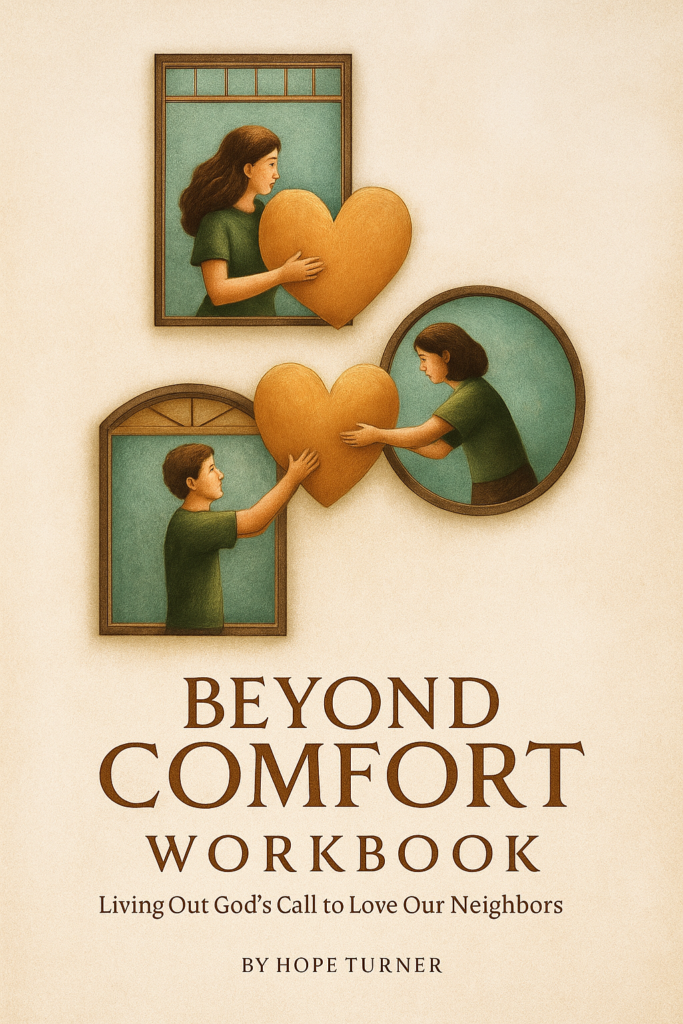
Beyond Comfort
A workbook for loving your neighbors well – even when it’s complicated. For individuals, small groups, and anyone ready to move from good intentions to real action.
Where We Go From Here
I’m not writing this from a place of having it all figured out. I’m writing this from a place of recognizing how far I have to go.
But here’s what I know: racism is sin. It violates the image of God. It contradicts everything Scripture teaches about human dignity and worth.
And sin is something we name, confess, and turn away from.
Not someday. Not when it’s convenient. Not when everyone else does it first.
Now.
Because until we learn to see every face as a reflection of the Creator, we will keep treating a blasphemous problem as if it were merely a social one.
And the image of God deserves better than that.
How have you wrestled with seeing the image of God in everyone? What has helped you recognize racism as a theological issue, not just a social one? I’d love to hear your thoughts in the comments.